
The Wrong Tree Was Not an Accident
Companion Essay: "The Painted Bark"

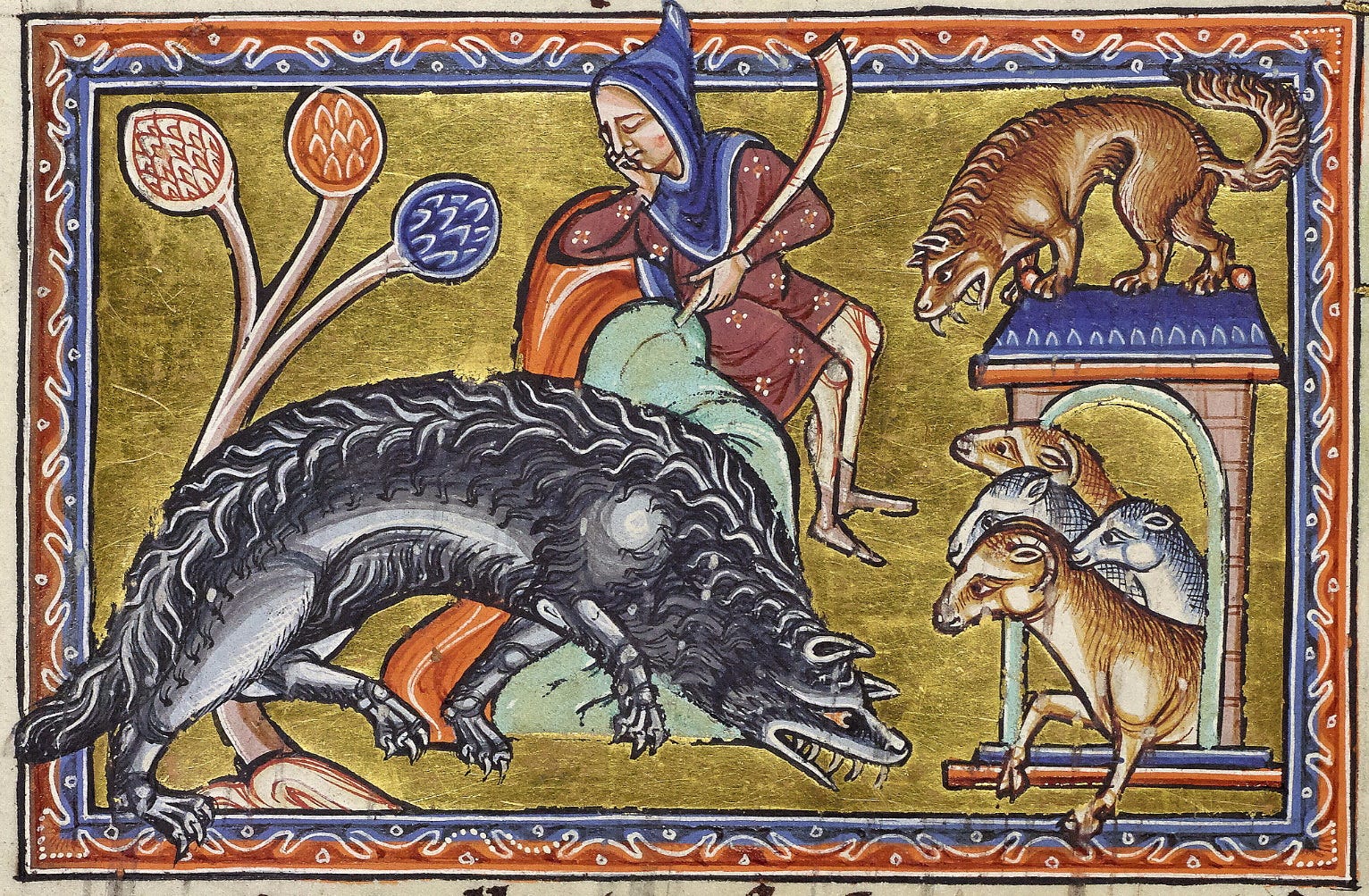
On decoys, domestication, and the wolves we forgot were ours…
There is an idiom in English that everyone knows. Barking up the wrong tree.
It comes from hunting. A dog corners prey in a tree and bays at the base to alert the hunter. If the prey leaps to a different tree, the dog may keep barking at the original one. The dog wastes its breath on an empty trunk.
The idiom carries a quiet condescension. The dog is foolish. The dog has misread the situation. The hunter, the human, will arrive and correct the error.
But the idiom hides three things.
The first is that the dog is honest. The dog believes the prey is there. The dog’s bark is a true statement of what the dog perceives. The dog is not performing. The dog is reporting.
The second is that the prey was real. Something leapt. Something escaped. The hunt was not a fabrication. The error is in the location, not the existence.
The third is the question the idiom never asks. What if the wrong tree was not an accident? What if the tree were painted? What if someone with an interest in keeping the chorus busy went to the trouble of nailing a target to an empty trunk so the hounds would face one direction while the masters worked another?
This is not paranoia. This is the documented condition of public attention of the twenty-first century. State actors run troll farms. Foreign intelligence services deploy bot networks at scale. Domestic political operations purchase outrage at industrial volume. Platforms optimize for engagement, which means optimizing for the painted bark — the target that produces the most barking, regardless of whether anything real is in the tree.
The Internet Research Agency, Cambridge Analytica, the bot armies on every contested election, the manufactured culture war that absorbs the daily attention of millions while actual policy moves through Congress in the dark — all of it is the painted bark, painted at industrial scale by people with budgets, targets, and quarterly results. The chorus is not stupid for barking. The chorus has been studied, segmented, A/B tested, and pointed. The wrong tree is not an accident. The wrong tree is a deliverable.
And then comes yet another meaning. The title of this poem is The Painted Bark. English carries one of its quietest cruelties in that word. Bark is the skin of the tree. Bark is the sound the dog makes. The painted bark of the tree is the decoy. The painted bark of the dog is the chorus. Both are fake. Someone nails both up. Both serve a function that the dog and the tree did not consent to. The lie wraps the target, and the lie wraps the throat that bays at it, and the same word names both because the same lie is doing both jobs at once. The tree wears a painted skin. The dog wears a painted sound. The masters built the decoy and bred the chorus and the language itself, watching, gave them one syllable to share.
This is the territory the poem walks.
The rest of this essay — the Norse cosmology, the forty-thousand-year contract, the documented industry of the painted bark, and the older words the mouth forgot — is for paid subscribers.
