
I Found Bob and George
Forty Years. One Word: Partner.

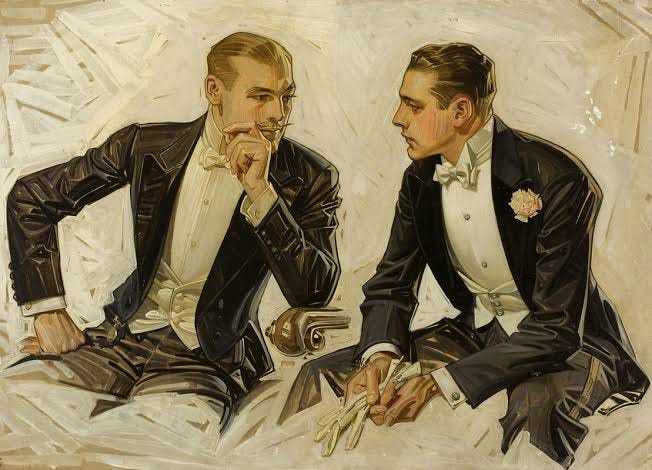
J. C. Leyendecker (1874–1951)
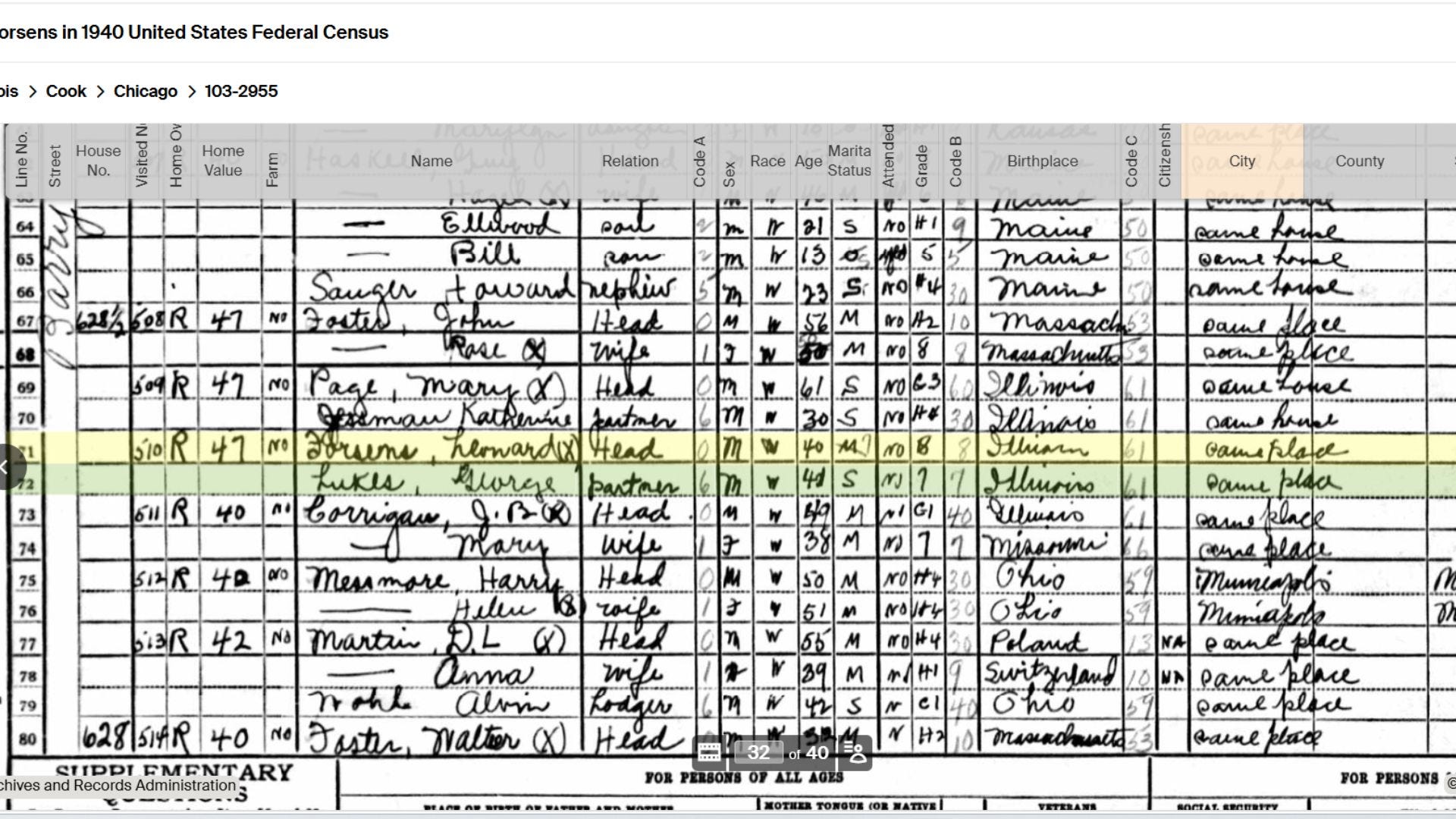
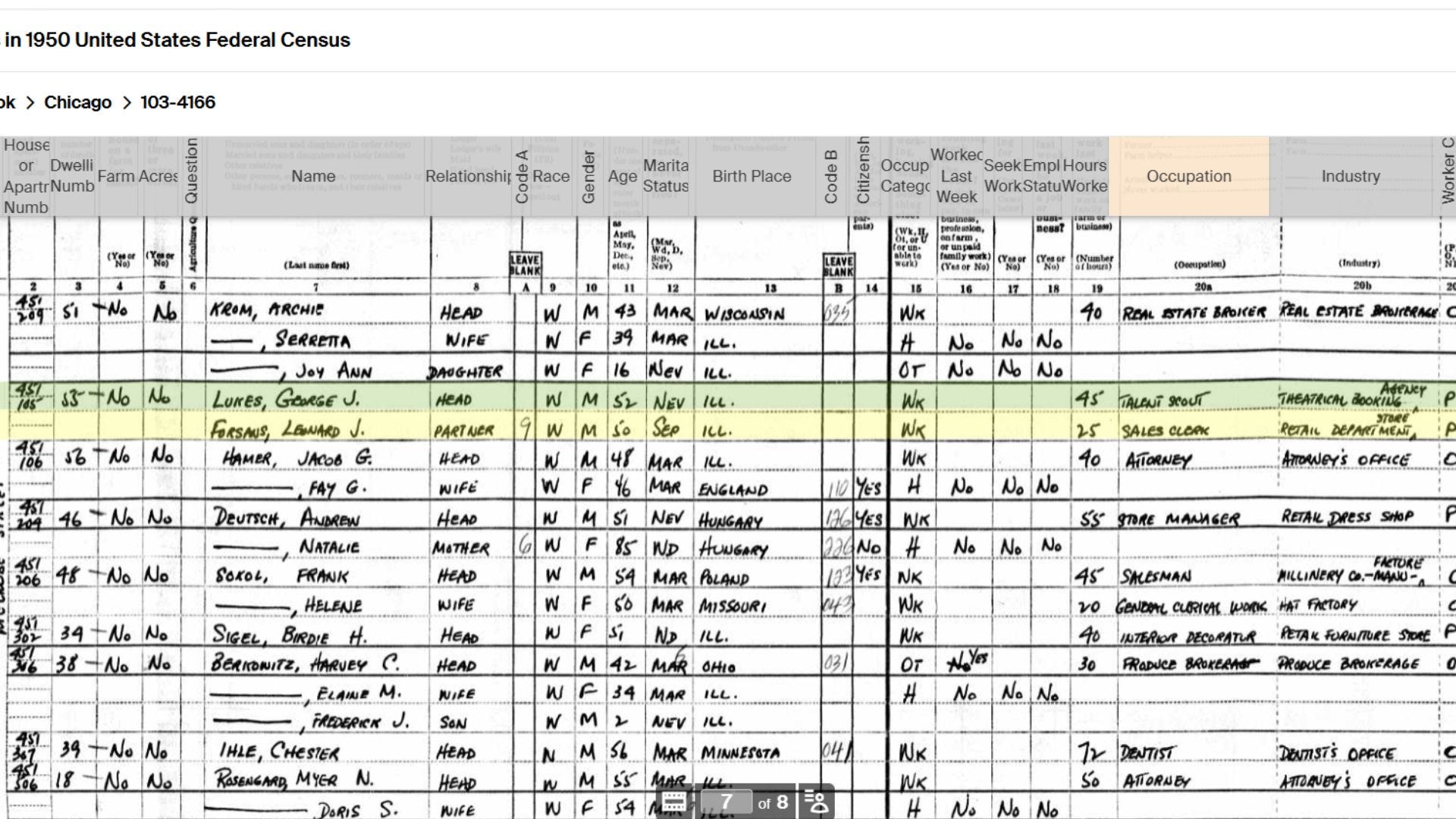
In 1940, a federal census enumerator walked into a building at 628½ West Barry Avenue in Chicago and wrote down two names. Leonard Forsans, age 40. George Lukes, age 41. In the column for Relationship, the enumerator wrote one word: partner. Ten years later, a different enumerator visited the same household and wrote the same word. Partner. Two men, two decades, one address– in an era when putting that on a government form could cost you your job, your housing, your family, your freedom, and your life.
When COVID locked everything down, I suddenly had time to dive into projects I had been putting off. I took a DNA test, paid for Ancestry, and disappeared into my family tree so completely that whole afternoons vanished without my noticing. I wasn’t interested in percentages or pie charts showing where my ancestors came from. I wanted the people behind the names. Who had lived before me? Who had crossed an ocean, made a home, loved someone, made trouble, made art, survived something? I wanted to know what my people had been like before my family became the family I knew.
I knew almost nothing about the people who had come before me. My parents had kept the family history close to themselves, and what little reached me came in fragments: a name here, a story there, some half-remembered relative who had done something worth mentioning. My grandparents died when I was young, sadly, before they could sit me down and tell me who my people were. I had no family archive waiting for me. I had two parents who had made the word family feel like a place you escape from, not a place you belong to.
And I needed to find out whether my bloodline held anyone worth claiming– because the two people who raised me did not qualify. Somewhere underneath the damage they had done, I suspected there were people in my history who deserved better than to be forgotten just because my parents never bothered to mention them.
So I chased the dead backward through the records, looking for anyone worth claiming.
Who had lived before me? Who had crossed an ocean? Who had made a home? Who had loved someone? Who had been funny, difficult, brave, talented, ordinary? What had my people been like before my family became the family I knew?
I wanted more than DNA. I wanted a history I could walk into. And somewhere in those records, I found Bob.
His real name was Leonard Joseph Forsans, born in Chicago in 1900. My family called him Bob. By every account I have heard, he pulled people toward him like gravity. Everyone loved visiting his home. They remembered how beautifully it was decorated, and how good the company was. He had some connection to music that I still haven’t fully untangled. Charming. Funny. Beloved enough that people were still talking about him decades after he died.
And then there was George.
George Lukes. An apartment on Barry Avenue. The Chicago neighborhood that would eventually become Boystown. I don’t know what their kitchen table looked like. I don’t know what music played in that apartment or what an ordinary Tuesday felt like inside those walls.
What I do know is what the census recorded.
Leonard Forsans, forty. George Lukes, forty-one. Relationship: partner.
Ten years later, the same two men were still there; and the enumerator wrote the same word again.
I remember finding Bob’s obituary during that first frantic binge of research. I was new to genealogy, rushing through records and details in the most gloriously unorganized way possible. But I remember that obituary because it stopped me cold. And this is where I need to be precise: I remember it. I have not been able to verify it.
My memory is that the obituary said something to the effect that Bob had lived with his partner, George, for forty years. If that is what it said, then somewhere in a Chicago newspaper in 1967, someone printed that sentence as though it required no explanation. Maybe my memory has sharpened the details over the years. Maybe it hasn’t. I need to find out.
I’ve spent days trying to find that obituary again. The genealogy sites that once put these records in front of me have since locked them behind paywalls, and I have lost my patience paying for the privilege of reading a dead man’s newspaper.
But I don’t need the obituary to prove Bob existed. I need it because I want to know what it said.
And because, somewhere between the census records and the memories my grandmother left me, I think there is a story here that I haven’t finished finding.
What I do remember from childhood is that my grandmother, Otilia, loved Bob. She talked about how everyone in the family loved going to his home, how beautifully it was decorated, and how wonderful the company was. My mother, considerably more conservative, called him “light in the loafers,” but even she spoke about him with warmth.
The family knew about George.
They did not flinch. They did not cut Bob off. They did not pretend George was a stranger. They showed up. They sat down at his table. They loved him.
That is a part of my family history I can take pride in.
For years, the only question my parents left me with was: What is wrong with my family? When the people who raise you make family feel like something to survive, you stop looking for more of it. You assume the box they built is the whole inheritance.
Genealogy blew that box apart. The question became: What else is in my family?
The where gives me geography and dates. The who gives me Bob: the man whose beautifully decorated home my grandmother remembered, the man everyone wanted to visit, the man whose name appears beside George’s on a government form.
So, I’m going to keep digging.
I want Bob’s obituary. I want photographs. I want George’s full story. Right now, all I have is his name beside Bob’s, two census records, and an address on Barry Avenue.
But that is a beginning, not an ending.
Because this is how people disappear. Not because their lives were unimportant, but because nobody thought to save the story. The people who knew them die. The photographs lose their names. The memories become fragments. Eventually, a whole life can be reduced to a few lines in a database, if it survives at all.
Once you find a story like that, I think you have a responsibility to keep looking.
Bob and George were here. They lived their lives in a time when doing so took courage, and somehow their story survived long enough for me to find it. I don’t know all of it yet. But I know enough to believe it deserves more than a census entry and a family memory.
So, I’m going to find what I can.
And I’m going to tell you what I find.
If you like finding the stories that get overlooked, become a paid subscriber. Your support keeps me writing, researching, and digging deeper.
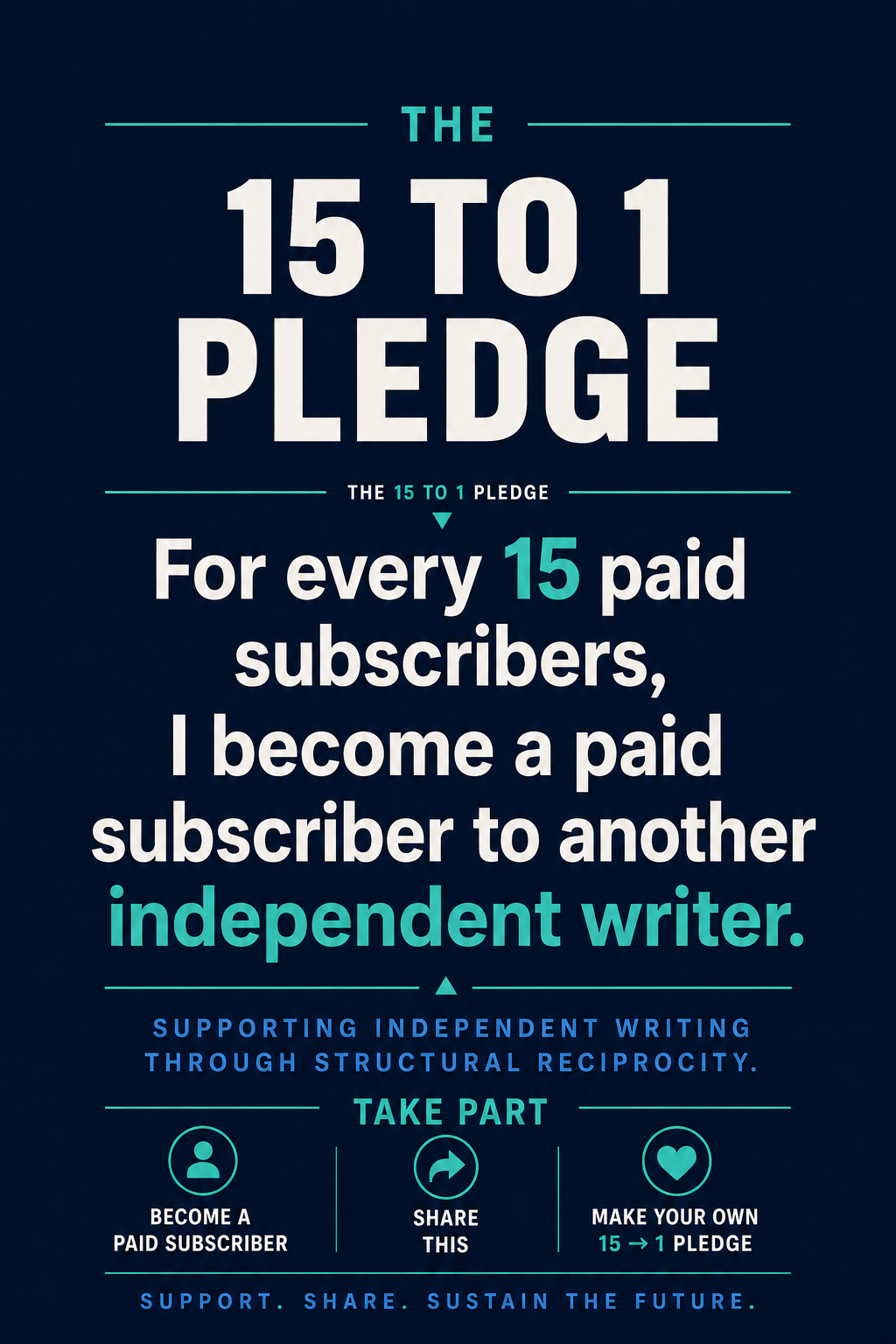
My 15-1 Pledge Below!
or
What a lovely beginning to this story! I love writing little bits about my family that I've found over the years, so I look forward to watching you dust off these lives.
This is wonderfully written and so exciting. I've been putting off my own DNA ancestry search and this is igniting the fire again. Yes, keep digging and sharing. <3